What’s normal, what’s not, and how to protect your home (and hands)
Puppy teething is one of the most confusing — and painful — stages of early dog ownership. One day your puppy is sweet and cuddly, the next they’re chewing everything in sight, acting irritable, and turning your hands into chew toys.
The good news?
Teething is temporary — and when you recognize the signs early, you can make it far easier for both you and your puppy.
Here are the 10 most common signs your puppy is teething, plus exactly what to do about each one.
_____
1. Excessive Chewing (On Everything)
This is the most obvious sign.
Teething puppies chew to:
relieve gum pressure
loosen baby teeth
soothe discomfort
Furniture, shoes, baseboards, fingers — nothing is off-limits.
How to help:
Provide multiple safe chew options with different textures and rotate them daily.
2. Swollen or Red Gums
During teething, gums may look:
slightly swollen
red or irritated
sensitive to touch
This is normal as long as there’s no pus or severe pain.
How to help:
Offer soft rubber chews or chilled (not frozen solid) teething toys.
3. Increased Drooling
Extra saliva helps lubricate sore gums.
You may notice:
wet spots on bedding
constant licking
damp toys
How to help:
Keep absorbent towels handy and provide appropriate chew outlets.
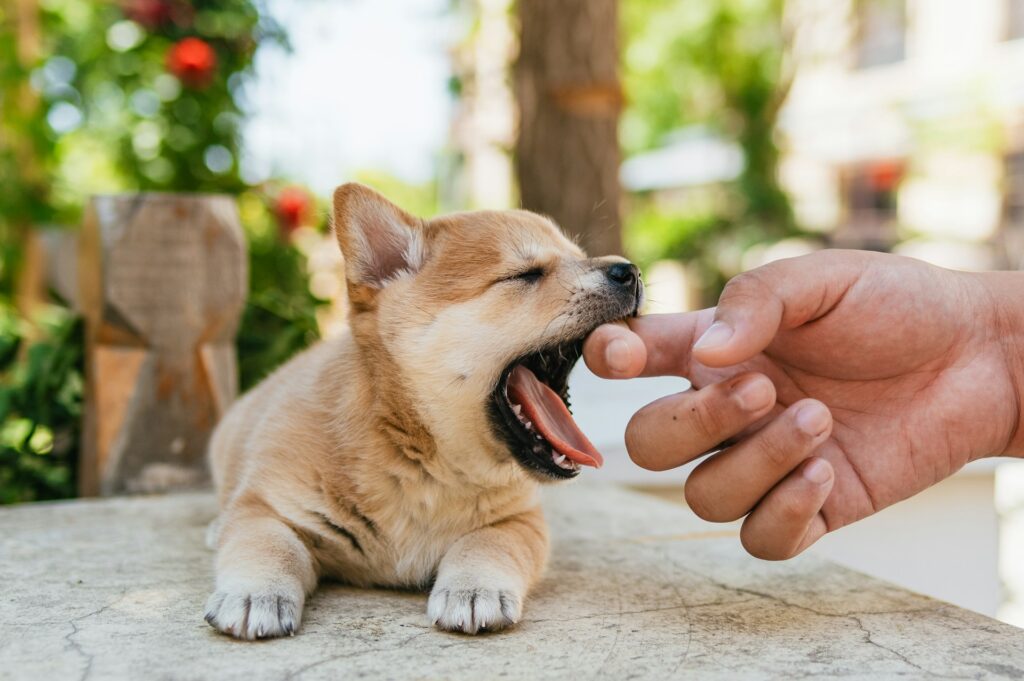
4. Nipping and Biting Hands More Often
Teething discomfort makes puppies mouth more intensely.
This isn’t aggression — it’s instinctive relief-seeking.
How to help:
Redirect biting immediately to toys and end play briefly if biting continues.
5. Chewing More During Rest or Bedtime
Teething pain often feels worse when puppies are tired.
You may notice increased chewing:
before naps
at night
during calm moments
How to help:
Offer a calming chew before rest to help soothe gums.
6. Finding Tiny Teeth Around the House
Puppies lose baby teeth between 3–6 months of age.
Most are swallowed — some end up on the floor or toys.
How to help:
This is normal. No action needed unless bleeding or pain appears excessive.
7. Slight Bleeding on Toys or Chews
Small spots of blood are common during tooth loss.
⚠️ Heavy bleeding, swelling, or strong odor is not normal.
How to help:
Stick to soft chews and monitor closely.
8. Decreased Appetite (Temporarily)
Sore gums can make eating uncomfortable.
Your puppy may:
eat slower
avoid hard kibble
drop food
How to help:
Soften food slightly with warm water during peak teething days.
9. Irritability or Shorter Attention Span
Discomfort affects mood.
Your puppy may seem:
less patient
more restless
less focused during training
How to help:
Keep training sessions short, positive, and low-pressure.
10. Seeking Cold Surfaces or Objects
Cold helps numb sore gums.
Puppies may:
chew metal bowls
lie on tile
prefer cool toys
How to help:
Offer chilled teething toys (never frozen hard enough to damage teeth).
When Does Puppy Teething Start and End?
Typical timeline:
baby teeth appear: 2–4 weeks
teething begins: ~12 weeks
adult teeth emerge: 4–6 months
teething ends: ~6–7 months
Every puppy is slightly different.
What NOT to Do During Teething
🚫 Don’t punish chewing
🚫 Don’t use bitter sprays on gums
🚫 Don’t allow unsafe household items
🚫 Don’t ignore excessive pain or infection signs
Teething needs management, not discipline.
Final Thought
Teething doesn’t turn puppies into monsters — it turns them uncomfortable.
With patience, redirection, and the right tools, this phase passes quickly — and sets the foundation for healthy adult chewing habits.
Your puppy isn’t being difficult.
They’re growing.