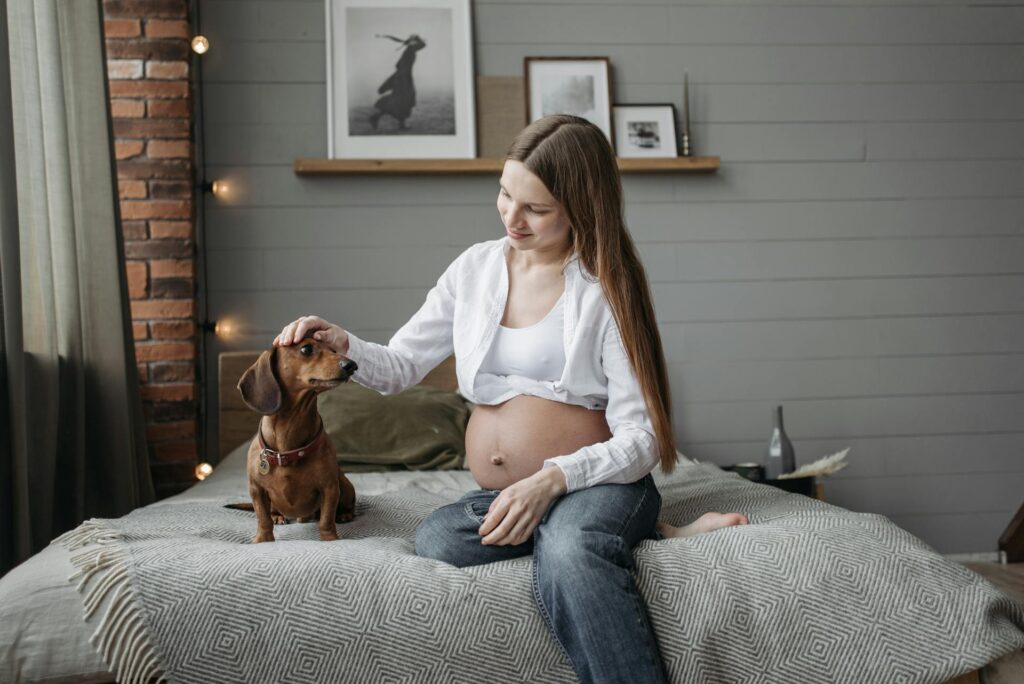
Dogs have an incredible ability to sense changes in their owner’s body and emotions — and pregnancy is one of the most fascinating examples. From the moment hormonal shifts begin to after the baby arrives, many dogs show unique reactions that reflect both instinct and deep emotional connection.
This article explores how dogs react to pregnancy, why these changes happen, and how you can prepare your furry friend for life with your new baby.
_____
1. Dogs and Their Extraordinary Sense of Smell
Before a pregnancy test can confirm it, your dog may already “know.”
That’s because dogs possess up to 300 million scent receptors — compared to about 5 million in humans. This superpower allows them to detect hormonal changes, such as increases in estrogen, progesterone, and hCG, which subtly alter your scent.
To your dog, you suddenly smell different, and that triggers curiosity, protectiveness, or confusion — depending on their temperament.
2. Early Reactions: When Your Dog First Notices
During the early stages of pregnancy, your dog might begin to act differently without you realizing why.
Common early reactions include:
Staying closer to you or following you more often
Becoming unusually affectionate or protective
Acting anxious, clingy, or even slightly withdrawn
These behaviors stem from instinct. Your dog senses that something has changed in your body chemistry and energy, and they’re adjusting to understand what it means.
3. Mid to Late Pregnancy: Protective Instincts Intensify
As your pregnancy progresses and physical changes become more visible, dogs often shift into protective mode.
You might notice behaviors such as:
Guarding you more actively at home or on walks
Sleeping near your belly or refusing to leave your side
Barking more at strangers or new visitors
This heightened protectiveness is part of their pack instinct — your dog perceives you as more vulnerable and feels responsible for your safety.
4. How Dogs React to Labor and Delivery
Many owners report that their dogs become restless or unusually alert right before labor begins.
Some even refuse to leave the room, pacing or whining as if they sense the approaching birth.
Dogs can pick up on:
Sudden hormonal surges before labor
Changes in your body temperature and breathing
Emotional cues such as anxiety or pain
While not all dogs react the same way, their awareness during this phase shows just how in tune they are with their human companions.
5. After the Baby Arrives: Adjusting to the New Family Member
Once your baby comes home, your dog’s world changes dramatically.
They may show curiosity, confusion, or even mild jealousy at first — all perfectly normal.
To help your dog adjust smoothly:
Introduce scents first (let them smell a blanket or item the baby has used).
Keep routines consistent — feeding, walking, and playtime should stay regular.
Reward calm behavior near the baby with gentle praise and treats.
Never force interaction — let curiosity develop naturally.
Over time, most dogs grow protective and gentle toward the new family member, often forming a lifelong bond.
6. Emotional Connection: Dogs Feel What You Feel
Pregnancy is not only physical — it’s emotional. Dogs are experts at reading body language, tone, and energy.
They mirror your emotions, so when you’re stressed or tired, your dog might act the same way.
The good news? Their empathy also helps you. Petting your dog releases oxytocin, the “love hormone,” which lowers stress and promotes emotional well-being for both of you.
7. Building Trust Before and After the Baby
The key to a harmonious home is preparation and patience.
Spend extra time bonding with your dog during pregnancy — gentle walks, calm cuddles, and positive reinforcement go a long way.
After the baby arrives, maintain affection and include your dog in family routines. The goal is for them to see the baby as part of the pack, not as competition for your love.
💛 Final Thoughts
Dogs don’t just notice pregnancy — they experience it alongside you.
Their reactions reflect instinct, empathy, and the unique emotional bond that makes them family.
Whether your dog becomes extra cuddly or a little overprotective, remember: they’re simply responding to one of life’s biggest changes — the arrival of someone new to love.
By guiding them with patience and reassurance, you’ll help create a beautiful bond between your dog and your baby that will last a lifetime.