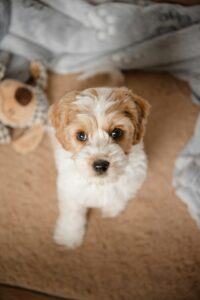
Your hour-by-hour guide to raising a calm, confident, well-adjusted puppy
Bringing home a puppy is exciting — but without structure, it can become chaotic fast. Puppies need a predictable routine to develop bladder control, emotional security, impulse regulation, and proper social habits.
This guide gives you a realistic daily schedule used by experienced breeders, trainers, and dog behaviorists, designed specifically for busy American households.
_____
The Puppy Daily Time Blocks
6:00–7:30 AM — Wake, Bathroom & Breakfast
First potty of the day
Calm greeting — not overly excited
Measured breakfast
Short training session (sit, name recall, focus)
Why this matters:
Morning meals set the metabolic rhythm and potty schedule for the rest of the day.
7:30–9:30 AM — Independent Rest Time
Puppy rests in crate or safe pen
Chew toy available
No constant attention
Why this matters:
Teaching independence early prevents separation anxiety later.
9:30–10:00 AM — Mid-morning Potty & Play
Quick bathroom break
Light physical activity
Positive reinforcement
Tip:
This is prime time to reward calm behavior after potty.
10:00–12:00 PM — Passive Rest & Quiet Time
Natural nap time
Soft background noise (TV or white noise)
Minimal stimulation
Why this matters:
Puppies grow during sleep — physically and neurologically.
12:00–12:30 PM — Lunch (if under 6 months)
Measured meal
Calm waiting before eating
Immediate potty trip afterward
Note:
More frequent meals = more frequent potty needs.
12:30–3:00 PM — Afternoon Nap
This period is often overlooked by owners.
But it’s essential for:
memory consolidation
learning retention
emotional reset
3:00–4:00 PM — Play, Socialization & Training
Basic obedience
Bite inhibition teaching
Gentle controlled exposure
Short leash training
This is the “learning window” of the day.
5:00–6:00 PM — Dinner & Potty
Final meal of the day
Calm feeding ritual
Straight outside for elimination
Important:
No water 2 hours before bedtime prevents night accidents.
7:00–8:30 PM — Evening Wind-Down
Gentle play
Low excitement
Chew toy or soft bonding
Dim lights
Goal:
Reduce stimulation before sleep.
9:00–10:00 PM — Final Potty & Bedtime
Quiet final bathroom trip
Calm entry into crate
Zero interaction once lights are off
This teaches:
emotional security
self-soothing
sleep consistency
How Long Can Puppies Hold Their Bladder?
General rule:
Months of age + 1 = maximum hours they can hold it
Example:
3-month puppy = 4 hours max
This prevents unrealistic expectations.
What NOT to Do
letting puppy follow you everywhere
overstimulation at night
inconsistent potty timing
chaotic greetings
dramatic departures and arrivals
free-run of the house too early
Structure now = stability for years.
Why This Schedule Works
It promotes:
bladder training
confidence building
emotional resilience
bite inhibition
impulse control
calmness
healthy sleep rhythms
Puppies crave boundaries — not constant attention.