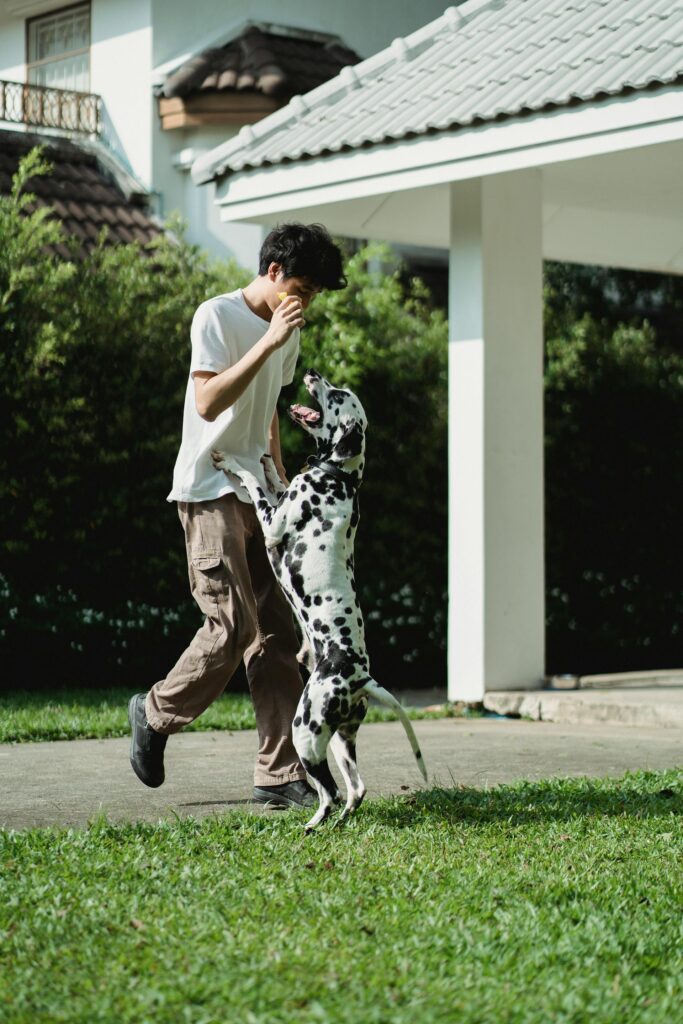
Your dog’s enthusiasm when guests arrive is adorable — until muddy paws hit someone’s clean clothes.
Jumping might seem like a harmless greeting, but it can lead to scratches, spills, and scared visitors (especially kids or elderly guests).
The good news? You can stop this behavior quickly and kindly — without yelling, kneeing, or punishing your dog.
Here’s how to teach your pup polite manners when greeting guests — and why they jump in the first place.
_____
🧠 Why Dogs Jump on People
Dogs jump because they’re excited and want attention — it’s that simple.
In the dog world, face-to-face interaction means affection.
So when your dog leaps toward your guest’s face, they’re not being dominant — they’re being friendly in the only way they know.
Unfortunately, every touch, smile, or “down!” can reinforce the behavior.
To a dog, any attention is a reward.
💡 Your first step isn’t punishment — it’s to remove the reward (attention) that fuels the behavior.
_____
Want to understand why dogs act out when guests arrive? Read our guide on 10 Strange Dog Behaviors That Actually Have Logical Explanations — it’ll help you see how natural instincts drive your dog’s excitement.
🚫 Step 1: Stop Rewarding the Jump
Even negative attention (pushing away, shouting, or laughing) tells your dog: “This works!”
✅ Do this instead:
When your dog jumps, turn away completely and avoid eye contact.
Say nothing. Wait for all four paws to touch the ground.
The moment they’re calm, reward with praise or a treat.
💬 Dogs quickly learn: “Jumping makes people disappear — sitting makes them love me.”
🐕 Step 2: Teach an Alternative Behavior
Your dog can’t jump and sit at the same time — so teach them what to do instead.
✅ Training method:
Practice greetings at home with family members.
Ask your dog to “Sit” before they’re allowed to say hello.
Have the person only give attention if the dog sits politely.
If they jump, the person turns away again.
Repeat this consistently, and your dog will start offering a sit automatically — because that’s what works.
💡 Consistency turns manners into muscle memory.
🛠️ Step 3: Use a Leash for Control During Visits
When new guests arrive, excitement peaks.
Use a short leash or training harness to prevent your dog from rushing the door.
✅ Try this approach:
Before opening the door, put your dog on a leash.
Ask them to “Sit” or “Stay.”
Let guests enter calmly, ignoring the dog until they’re settled.
Once your dog relaxes, release them for a controlled greeting.
Over time, they’ll associate calmness with getting to say hello.
💡 You’re teaching impulse control — the foundation of all good manners.
🎯 Step 4: Manage the Environment
In the early stages of training, set your dog up for success.
If they’re not ready to greet politely, manage the situation.
✅ Use:
Baby gates or a playpen to create a temporary “greeting area.”
A quiet space or crate for easily overstimulated dogs.
Calming treats or pheromone diffusers for anxious greeters.
💬 You’re not isolating them — you’re helping them calm down so they can succeed.
_____
If you learn to read your dog’s signals before excitement escalates, you can prevent jumping altogether. Discover how in 10 Ways to Understand Your Dog and What They’re Trying to Tell You.
🧍♂️ Step 5: Train Your Guests Too
Yes — your guests need training, too!
Many well-meaning people encourage jumping without realizing it.
✅ Teach them to:
Ignore the dog completely if they jump.
Turn sideways or step back — no touching, talking, or eye contact.
Greet only when the dog sits or stays calm.
💡 Dogs learn faster when everyone follows the same rules.
⏱️ Step 6: Practice Short, Controlled Greetings
Don’t wait for big parties — start small.
Invite one or two patient friends over to practice calm arrivals.
Reward your dog for staying seated, even when guests move around, talk loudly, or drop things.
Gradually increase excitement levels until your dog remains calm in any situation.
💬 “Controlled chaos” helps your dog learn self-control in real life.
🐾 Step 7: Stay Patient and Consistent
Jumping is usually a learned habit, not a stubborn one — and habits take time to unlearn.
Celebrate small wins: one calm greeting is a step toward a polite future.
Avoid harsh corrections.
Punishment may suppress behavior temporarily but builds fear instead of understanding.
💛 Positive reinforcement always wins long-term.
💡 Bonus: The “Quiet Arrival” Technique
If your dog explodes with excitement the moment they hear the doorbell, try this:
Ask a friend to ring the bell or knock.
Ignore your dog until they stop barking or jumping.
When they’re calm, toss a treat away from the door and open it quietly.
Repeat until they learn that quiet = guests appear, excitement = no guests.
💛 Final Thoughts
Jumping on guests is one of the easiest dog behaviors to fix — if you stop rewarding it and start rewarding calmness instead.
It’s not about dominance or defiance; it’s about communication.
By teaching your dog polite greeting manners, you’re not only protecting your guests — you’re also helping your dog feel secure, respected, and understood.
💬 A well-mannered dog makes every visit more enjoyable for everyone — especially your furry host.