Freedom is earned — not rushed
Walking a dog off-leash looks effortless when it’s done right. The dog checks in naturally, responds instantly, and moves with calm confidence.
But that kind of freedom doesn’t come from luck — it comes from training, trust, and preparation.
Many owners make the mistake of removing the leash too early, turning what should be a joyful skill into a stressful chase.
Here’s how to teach off-leash walking the safe way — step by step.
_____
Step 1: Understand That Off-Leash Is a Skill, Not a Right
Not every dog is automatically ready for off-leash freedom.
Before starting, your dog should:
respond to their name consistently
have reliable recall indoors
understand basic commands (sit, stay, come)
remain calm around distractions
If these skills are missing, build them first.
Step 2: Start With a Long Line (Not Freedom Yet)
A long training leash (15–30 feet) is the safest starting point.
Why it works:
gives the dog the feeling of freedom
keeps safety control in your hands
allows recall practice at real distance
Practice in low-distraction places:
quiet parks
empty fields
fenced areas
This stage builds habits without risk.
Step 3: Master Recall Before Anything Else
Off-leash safety depends on one behavior:
Coming back every single time.
Practice recall by:
calling your dog happily
running away slightly instead of toward them
rewarding heavily with treats or play
Never punish after they return — even if they were slow. You want returning to feel amazing.
Step 4: Teach the “Check-In” Habit
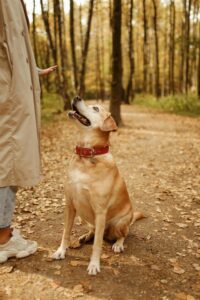
Great off-leash dogs regularly look back at their owners without being asked.
You can teach this by:
rewarding eye contact during walks
changing direction unexpectedly
praising when your dog notices and follows
Soon your dog starts monitoring your position naturally.
Step 5: Add Real-Life Distractions Slowly
Once recall works in quiet areas, gradually increase difficulty:
new locations
other dogs at a distance
joggers or bikes
squirrels and birds
If recall fails, you moved too fast. Go back one step.
Progression matters more than speed.
Step 6: Practice Emergency Recall
Choose a special word used only for emergencies.
Examples:
“NOW!”
“HERE!”
whistle signal
This cue should always mean:
➡️ jackpot rewards
➡️ massive praise
➡️ immediate fun
Emergency recall can prevent accidents — so train it seriously.
Step 7: Know When NOT to Go Off-Leash
Even well-trained dogs shouldn’t be off-leash everywhere.
Avoid:
busy streets
areas with wildlife danger
unfamiliar trails
places where leash laws require restraint
Responsible off-leash training respects safety and local rules.
Step 8: Common Mistakes That Ruin Off-Leash Training
🚫 Releasing the leash too early
🚫 Calling repeatedly without enforcement
🚫 Chasing your dog when they ignore you
🚫 Only calling when the fun ends
🚫 Training only in one location
Variety and consistency create reliability.
Step 9: The 80% Rule (Smart Trainers Use This)
If your dog responds correctly 80% of the time on a long line, you’re close — but not ready yet.
Aim for:
near-perfect recall in multiple environments
calm response under mild excitement
Patience now prevents major problems later.
Step 10: Your First True Off-Leash Walk
Choose:
a safe, legal area
minimal distractions
calm weather
good visibility
Keep the first session short. Success builds confidence — for both of you.
Can Every Dog Learn Off-Leash Walking?
Most dogs can improve dramatically, but not all should be fully off-leash.
Factors that affect success:
prey drive
fear reactivity
breed instincts
training consistency
owner awareness
The goal isn’t perfection — it’s safe, reliable communication.
Final Thought
Off-leash walking isn’t about control.
It’s about trust.
When your dog chooses to stay close because they want to — not because they’re forced — that’s real training.
Move slowly, reward generously, and remember: freedom earned safely lasts forever.